



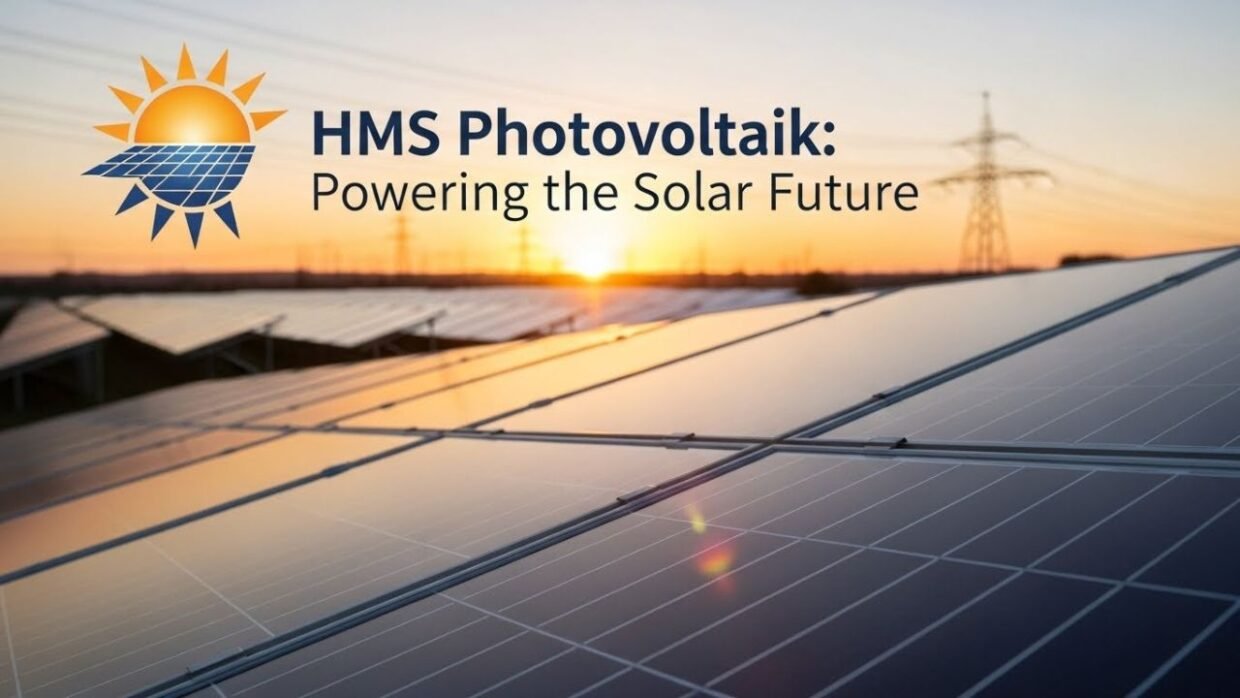
In an era where renewable energy is increasingly critical to addressing climate change and rising electricity costs, photovoltaic solar power has emerged as one of the most promising technologies. Within this rapidly growing sector, the term HMS Photovoltaik is becoming more common — not just as a label but as a concept for smarter, more efficient, and more resilient solar energy systems. Whether you are a homeowner, a business owner, or simply interested in clean energy, understanding HMS Photovoltaik can help you see how solar power is evolving beyond simple panel installations to fully integrated energy ecosystems.
What Does HMS Photovoltaik Mean?
HMS Photovoltaik combines two key ideas:
-
Photovoltaik — the German word for photovoltaics, referring to the conversion of sunlight into electricity.
-
HMS — commonly shorthand for Hybrid Management System or specific branded microinverter series (like Hoymiles HMS microinverters) used in modern solar setups.
Together, the term describes solar solutions that do more than just generate electricity — they manage, optimize, and monitor energy flow across all system components. This can include intelligent inverters, real-time data feedback, battery storage integration, and adaptive energy routing.
A Brief Look at Photovoltaic Technology
At its simplest, photovoltaic (PV) technology uses solar cells — usually made from silicon — to convert sunlight into direct current (DC) electricity. An inverter then converts DC into alternating current (AC), which powering homes or businesses. Excess energy can be stored or fed back into the grid.
Traditional PV installations focus mainly on panel output, but HMS Photovoltaik systems embed additional layers of intelligence and control. These systems blend:
-
High-efficiency PV modules
-
Hybrid or microinverter technology
-
Energy storage solutions
-
Monitoring and management software
-
Real-time data analytics
Core Components of HMS Photovoltaik Systems
To understand why HMS Photovoltaik is distinct, it’s helpful to break down its component technologies:
1. Solar Panels (PV Modules)
These are the heart of any solar system. Modern panels used in HMS setups are often monocrystalline, achieving higher energy conversion rates — even in less-than-ideal light conditions.
2. Inverters and Microinverters
In classic PV systems, one central inverter converts all DC power to AC. HMS setups often use microinverters (such as Hoymiles HMS series) that attach to individual panels. This panel-level MPPT tracking boosts efficiency and minimizes losses from shading or dirt on one unit.
3. Hybrid Management System (HMS)
This is the smart core. HMS uses sensors, controllers, and software to balance power flows. It decides whether energy should be used instantly, stored in batteries, or exported to the grid based on real-time demand and generation.
4. Energy Storage (Batteries)
Lithium-ion and other modern batteries allow excess solar electricity to be saved for cloudy days or nighttime use — a major advantage for resilience and independence from the grid.
5. Monitoring and Control Software
Most HMS Photovoltaik systems come with apps or dashboards showing live performance data, alerts, and efficiency metrics — transforming raw generation into actionable insight.
How HMS Photovoltaik Works in Practice
Here’s a simplified look at the process:
-
Sunlight hits the panels, generating DC electricity.
-
Microinverters or hybrid inverters convert DC to AC while tracking performance per panel to optimize output.
-
The HMS controller analyzes real-time data — including solar intensity, household demand, and battery charge.
-
Based on this data, the system automatically directs energy where it’s most useful: direct consumption, batteries, or the grid.
-
Monitoring tools provide insights and alert owners to inefficiencies or faults.
Through this intelligent balancing act, HMS Photovoltaik systems achieve higher energy yield, greater autonomy, and smarter cost savings than traditional PV arrays.
Key Advantages of HMS Photovoltaik
Enhanced Energy Efficiency
By optimizing energy flows and minimizing losses from partial shading or mismatched panel output, HMS Photovoltaik systems can produce significantly more usable power per square meter than basic PV setups.
Real-Time Monitoring & Control
Users get detailed performance data, allowing proactive maintenance and faster fault detection — essential for maximizing lifetime energy yield.
Greater Energy Independence
With battery storage and smart management, homes and businesses can maintain power even during grid outages or peak pricing periods.
Lower Long-Term Costs
Although initial costs may be higher due to smart components and storage, long-term electricity savings and possible feed-in tariffs or incentives make these systems financially attractive over time.
Environmental Impact
Solar power significantly cuts carbon emissions compared to fossil fuels — and optimized systems like HMS Photovoltaik push that impact even further by increasing total energy harvested over system lifespan.
Applications Across Sectors
HMS Photovoltaik isn’t limited to residential rooftops. Its modular nature allows use in diverse sectors:
-
Residential homes – reduce bills and gain energy autonomy.
-
Commercial buildings – cut operating costs while promoting sustainability.
-
Industrial facilities – support heavy energy demand with high-efficiency systems.
-
Agricultural sites and rural electrification – offer reliable power where grid access is limited.
These systems can be scaled for utility-size installations or tailored microgrids serving communities too.
Challenges and Considerations
Despite its advantages, HMS Photovoltaik faces some hurdles:
Upfront Costs
Smart systems with storage and advanced management can be more expensive initially than standard PV installations.
Technical Complexity
Advanced components and software require professional design and installation — and may need digital literacy for effective homeowner use.
Grid Integration Limitations
In some regions, older electrical infrastructure struggles to integrate distributed generation at scale. Supportive policies and grid upgrades are needed to unlock full potential.
The Future of HMS Photovoltaik
The renewable energy landscape is rapidly evolving. Experts see trends such as:
-
AI-driven optimization for predictive maintenance
-
Integration with smart grids and EV charging infrastructure
-
Next-generation PV cells (e.g., perovskite-based)
-
Enhanced battery technologies for longer storage cycles
As global energy demand rises alongside net-zero commitments, intelligent solar systems like HMS Photovoltaik are poised to play a central role in meeting environmental, economic, and reliability goals.
Conclusion
HMS Photovoltaik is more than a buzzword — it represents the future of solar energy. By combining high-efficiency photovoltaic technology, intelligent hybrid management systems, real-time monitoring, and adaptable energy storage, this approach transforms sunlight into a more resilient, efficient, and user-centric power source.
Whether for homes looking to cut bills, businesses seeking sustainability, or nations striving to reach emissions targets, HMS Photovoltaik offers a smart, scalable path forward in the renewable energy revolution.